
Gallbladder Surgery
Understanding Gallbladder Surgery: Your Path to Relief
If you have been told you have gallstones, or are experiencing upper abdominal pain after eating, Mr Mohamed Aly offers rapid specialist assessment and keyhole gallbladder surgery in London. Same-day diagnostics are available at your first consultation wherever possible. Emergency assessment is also available for acute gallbladder problems including infected gallbladder and gallstone pancreatitis.
Patient feedback after gallbladder surgery
What is gallbladder surgery (cholecystectomy)?
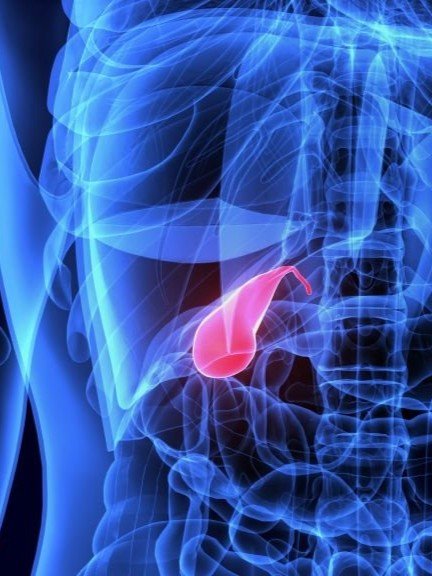
Gallbladder surgery, medically known as a cholecystectomy, is the surgical procedure to remove your gallbladder. This small, pear-shaped organ stores bile, a digestive fluid produced by your liver. When gallstones form or the gallbladder becomes inflamed, it can cause significant pain and serious health problems.
Why is gallbladder surgery necessary?
Gallbladder removal becomes necessary when gallstones or inflammation cause persistent and severe symptoms, or lead to complications such as:
- Frequent or severe gallstone attacks (biliary colic): Intense pain in your upper right abdomen.
- Acute cholecystitis: Sudden, severe inflammation of the gallbladder.
- Pancreatitis: Inflammation of the pancreas caused by a gallstone blocking the bile duct.
- Choledocholithiasis: Gallstones moving into and blocking the main bile ducts.
- Gallbladder polyps: Certain types or sizes of polyps that may have a risk of becoming cancerous.
- Acalculous cholecystitis: Gallbladder inflammation without the presence of stones.
How gallbladder surgery is done?
The “best” surgery for gallbladder removal is typically the one that offers the most effective outcome with the least invasiveness for the patient, tailored to their specific condition. For most patients, this is laparoscopic cholecystectomy.
The Keyhole Approach: Laparoscopic cholecystectomy is the most common and preferred method for gallbladder removal. It is a minimally invasive procedure:
- Small Incisions: Your surgeon will make several tiny incisions (usually 3-4, each about 0.5-1 cm) in your abdomen. One incision is made near the belly button.
- Laparoscope Insertion: A thin, lighted tube with a camera (laparoscope) is inserted through one incision, allowing the surgeon to view your internal organs on a monitor.
- Inflation: Your abdomen is gently inflated with carbon dioxide gas to create working space and better visibility.
- Instrument Insertion: Specialised surgical instruments are inserted through the other small incisions.
- Gallbladder Removal: The surgeon carefully detaches and removes the gallbladder.
- Closure: The instruments are removed, the gas is released, and the small incisions are closed with stitches or surgical tape.
How long does gallbladder surgery take?
Gallbladder surgery usually takes between half an hour to an hour and a half. Some cases where the gallbladder has been infected for a long time, take a little longer to finish. More time is needed to carefully perform the surgery and avoid injury.
Is gallbladder surgery dangerous?
Modern laparoscopic cholecystectomy, is very safe and is one of the most commonly performed abdominal surgeries worldwide.
However, like any surgical procedure, there are potential risks, though serious complications are rare. These can include:
- Bleeding
- Infection at the incision sites or internally
- Bile leak (from the liver or bile ducts)
- Injury to the bile duct or nearby organs (e.g., liver, intestine)
- Complications from anesthesia
- Blood clots
I will carefully assess your individual health and circumstances to minimize risks and ensure the safest possible outcome. I will discuss all potential risks with you in detail during your consultation.
Recovery and what to expect
Knowing “what is gallbladder surgery recovery time” is a key concern for many patients. The recovery period largely depends on the type of surgery performed and your overall health.
What Is The Recovery Time?
- Laparoscopic Cholecystectomy:
- Hospital Stay: Most patients go home the same day or within 24 hours.
- Return to Light Activities: You can usually resume light activities within a few days.
- Full Recovery: Most people feel significantly better within 1 to 2 weeks and can return to normal activities, including work, within 2-4 weeks. You should avoid strenuous exercise or heavy lifting for 4-6 weeks.
Where is Pain After Gallbladder Surgery?
It’s common to experience some pain after gallbladder surgery.
- Incision Sites: You will feel pain and tenderness around your small abdominal incisions.
- Shoulder Pain: A common sensation is pain in the right shoulder or upper back. This is from the residual gas (from the laparoscopic procedure) irritating the diaphragm, which shares nerves with the shoulder. This usually subsides within 24-48 hours.
- Abdominal Discomfort: You might also feel general abdominal discomfort, bloating, or cramping as your body adjusts.
You receive pain medication to manage your discomfort before you go home.
What to Expect After Gallbladder Surgery:
- Diet: You’ll start with clear liquids and gradually advance to a normal diet. Some people find that certain fatty or greasy foods may cause digestive upset initially, but most can return to a regular diet over time. I will provide you detailed dietary advice.
- Bowel Movements: It’s common to experience changes in bowel habits, such as diarrhea or constipation, in the days or weeks following surgery.
- Activity: Walking is excellent for recovery. Avoid heavy lifting and strenuous activities as advised by your surgeon.
- Incision Care: Keep incisions clean and dry. Watch for signs of infection (redness, swelling, pus, increasing pain).
When is Gallbladder Surgery an Emergency?
While many gallbladder surgeries are planned, there are situations where gallbladder surgery is needed urgently or becomes an emergency.
Emergency gallbladder surgery is typically warranted when complications arise that pose immediate threats to your health, such as:
- Acute Cholecystitis with Severe Symptoms: Intense, unrelenting abdominal pain, often accompanied by fever, chills, nausea, and vomiting, that doesn’t respond to conservative treatment.
- Gallstone Pancreatitis: Inflammation of the pancreas caused by a gallstone, which can be a severe and life-threatening condition requiring immediate intervention.
- Cholangitis: A severe infection of the bile ducts, often caused by a blocked gallstone, leading to fever, chills, jaundice, and severe abdominal pain. This is a medical emergency.
- Gallbladder Perforation: A rare but serious complication where the inflamed gallbladder wall ruptures, potentially leading to widespread infection (peritonitis).
In these critical scenarios, emergency surgery aims to:
- Relieve life-threatening blockages.
- Control severe infection and inflammation.
- Prevent organ damage or sepsis (a life-threatening response to infection).
- Address acute, unmanageable pain.
Delaying surgery in these cases can lead to much more severe health consequences. If you are struggling with sudden problems with gallbladder, please give our team a call.
How long does it really take to recover from gallbladder surgery?
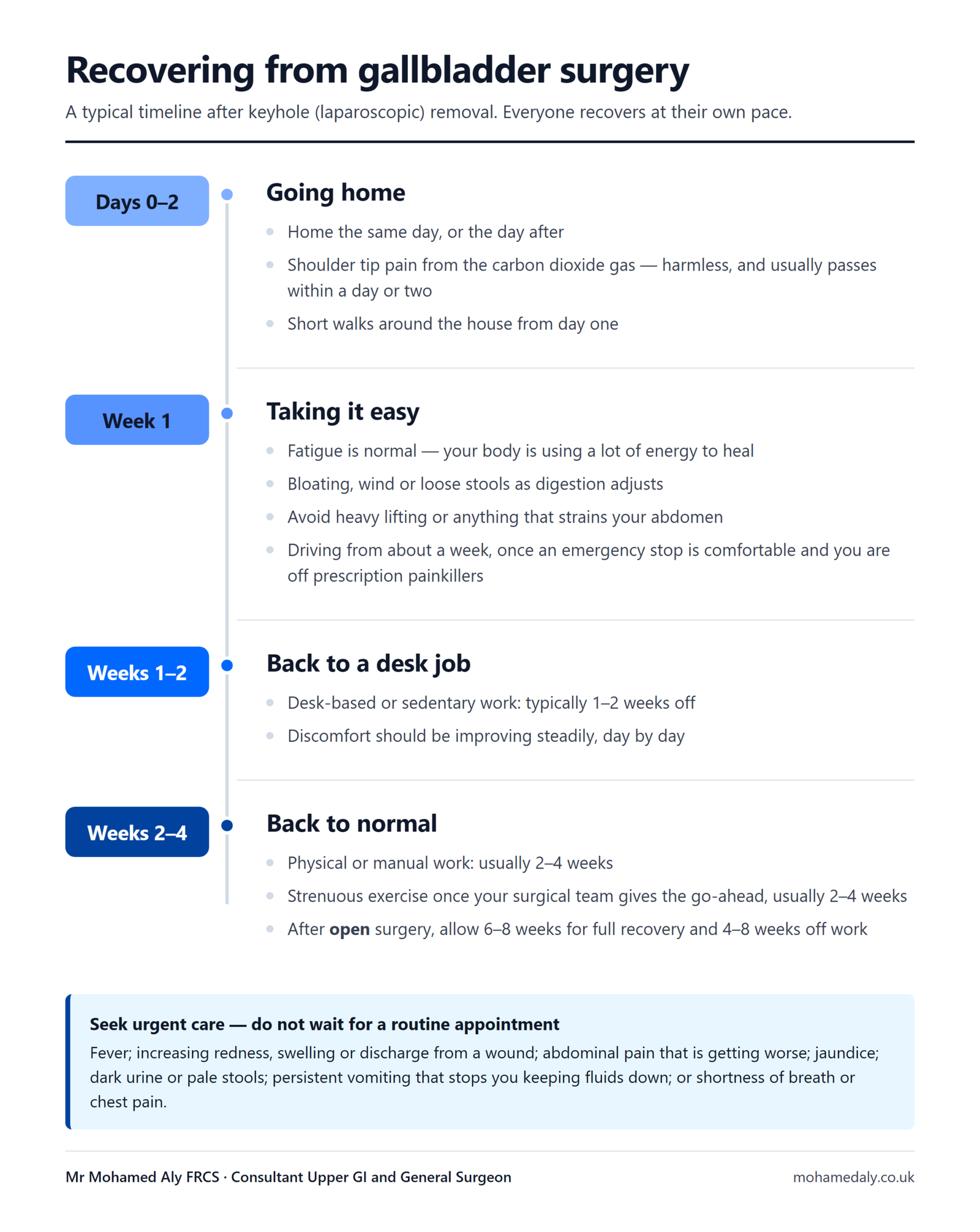
The honest answer depends mainly on which type of surgery you had. With keyhole surgery (laparoscopic cholecystectomy), most people feel well enough to move around the house within a day or two, drive again after about a week (once they can do an emergency stop comfortably and are off strong painkillers), and return to a desk job within one to two weeks. More physical work or exercise usually takes two to four weeks.
Open surgery, where a larger cut is made in the abdomen, demands more from your body. A full recovery typically takes six to eight weeks, and you will need more support at home in the early stages.
Individual factors — your general health before surgery, your age, and whether you had any complications — all influence how quickly you bounce back. These timescales are general guides, not guarantees for any individual.
Your surgical team will give you specific advice tailored to your situation before you are discharged.
Is recovery different for women?
In straightforward terms, no — the biology of gallbladder removal and the healing process are not materially different between men and women. The same tissues are cut and repaired, and the body heals in the same way regardless of sex.
Gallbladder problems are more common in women, which means this question comes up a great deal. It is completely understandable to wonder, but you can reassure yourself that the general recovery timescales and advice apply equally to you.
If you have any specific personal circumstances — for example, if you are breastfeeding or have recently given birth — do raise those with your surgeon before the operation so that your care can be planned accordingly.
What should I expect in the first week?
The first few days are usually about rest. Fatigue is normal — your body is using a lot of energy to heal. Most people go home the same day or the day after keyhole surgery and spend the first week taking things easy at home.
You may notice some bloating, wind, or loose stools. This is common as your digestive system adjusts to the absence of the gallbladder. It usually settles within a few weeks.
Shoulder tip pain is a well-known side effect of keyhole surgery. It is caused by the carbon dioxide gas used during the procedure irritating the diaphragm, and it is felt referred up to the shoulder. It sounds alarming but is harmless and usually passes within a day or two. Gentle movement and walking can help.
Short walks around the house from day one are encouraged. Avoid heavy lifting, strenuous housework, or anything that strains your abdomen until your surgical team says otherwise.
Is pain after gallbladder removal normal?
Yes, some discomfort after gallbladder removal is entirely normal. You can expect soreness around the wound sites, a general aching feeling in the abdomen, and the shoulder tip pain described above.
This discomfort is usually manageable with the painkillers your team recommends at discharge, and it should steadily improve day by day. If your pain is getting worse rather than better, or if it feels different or more severe than it did initially, that is a reason to contact your surgical team rather than wait.
A small number of people experience ongoing digestive discomfort — including bloating or changes in bowel habit — for several weeks after surgery. This is usually temporary. If symptoms persist beyond a few weeks, mention them at your follow-up appointment.
What can I eat after my gallbladder is removed?
The gallbladder stores bile, which helps to digest fat. Once it is removed, bile drips continuously from the liver into the small intestine rather than being released in concentrated bursts. This means your body can still digest fat, but it may take a little time to adjust.
In the first few weeks, many people find that smaller, more frequent meals sit better than large ones. A diet that is lower in fat to begin with — while your digestive system settles — is sensible for most people. Very greasy or heavily fried food may cause loose stools or cramping initially.
There is no single diet plan that suits everyone after gallbladder removal. The general principle is to eat balanced, varied meals, introduce foods gradually, and notice which, if any, seem to trigger discomfort. Most people find they can eat a normal, unrestricted diet within a few weeks to a couple of months.
If you are struggling significantly with your diet or losing weight unintentionally, ask for a referral to a dietitian through your surgical team.
When should I call the surgeon?
Most post-operative discomfort is normal and improves steadily, but some symptoms need prompt attention. Do not wait for a routine appointment if you notice any of the following.
Seek urgent care if you have a high temperature (fever), increasing redness, swelling, or discharge from a wound, severe abdominal pain that is getting worse, yellowing of the skin or whites of the eyes (jaundice), dark urine or pale stools, persistent vomiting that stops you keeping fluids down, or shortness of breath or chest pain.
These symptoms can indicate infection, a bile leak, or another complication that needs to be assessed quickly. If you cannot reach your surgical team and you are concerned, go to your nearest emergency department rather than wait.
When in doubt, call. No surgeon will mind being contacted by a patient who turns out to be fine. It is always better to be checked.
Frequently asked questions
How soon can I drive after gallbladder surgery?
After keyhole surgery, most people can drive again after about a week, but only when they can perform an emergency stop comfortably and are no longer taking prescription-strength painkillers. After open surgery, it is usually longer — your surgical team will advise you based on your individual progress.
How long will I be off work after gallbladder removal?
For a desk-based or sedentary job, one to two weeks off is typical after keyhole surgery. Physical or manual work usually requires two to four weeks. Open surgery generally means a longer absence of four to eight weeks. Your surgeon can provide a fit note if needed.
Will my digestion go back to normal after gallbladder removal?
For most people, yes. The digestive changes in the first few weeks — loose stools, bloating, or sensitivity to fatty food — usually settle as the body adapts. A small number of people have longer-term changes, but this is less common. If symptoms persist beyond a couple of months, discuss them with your surgeon or GP.
Can I exercise after gallbladder surgery?
Light walking is encouraged from the very first days at home. More strenuous exercise — running, swimming, gym work, or anything that engages the core — should wait until your surgical team gives the go-ahead, usually around two to four weeks after keyhole surgery and longer after open surgery.
Do I need a special diet permanently after gallbladder removal?
The vast majority of people return to a normal, unrestricted diet within a few weeks to a couple of months. Starting with lower-fat, smaller meals while your body adjusts is sensible, but there is no medically required permanent diet for most people after gallbladder removal. Individual tolerance varies, so pay attention to how different foods make you feel.
Your Trusted Partner for Surgical Health in London
I specialise in advanced laparoscopic techniques for gallbladder removal, ensuring you receive the highest standard of care with a focus on your comfort and rapid recovery.
I will provide you with:
- Expert Diagnosis: Accurate assessment of your condition using state-of-the-art imaging and diagnostic tools.
- Personalised Treatment Plans: Tailored approaches based on your specific health needs.
- Minimally Invasive Options: A strong emphasis on keyhole techniques for faster recovery.
- Comprehensive Post-Operative Care: Detailed guidance and support throughout your recovery journey.
For GPs — Gallstones Referral & Management Guide
A practical primary-care reference for the assessment, referral, and management of gallstones. Covers when to refer, when to reassure, and when urgent admission is required. Includes guidance on polyp management, the 2WW pathway, pregnancy considerations, and what to include in a referral.
For referrals: aly.admin@lips.org.uk
Secretary: +44 (0) 207 164 6114
Same-day diagnostics available wherever possible.